NETENGINE
2 BILLION PEOPLE USE GOOGLE MAPS DAILY. MOST LOCAL BUSINESSES ARE INVISIBLE TO ALL OF THEM...
Your GPS used to be stupid. Point it toward an address, follow the blue line. Simple. Functional. Forgettable.
Why Incomplete GBP Profiles Get Algorithmic Exclusion While Competitors Capture Every Driving Prospect
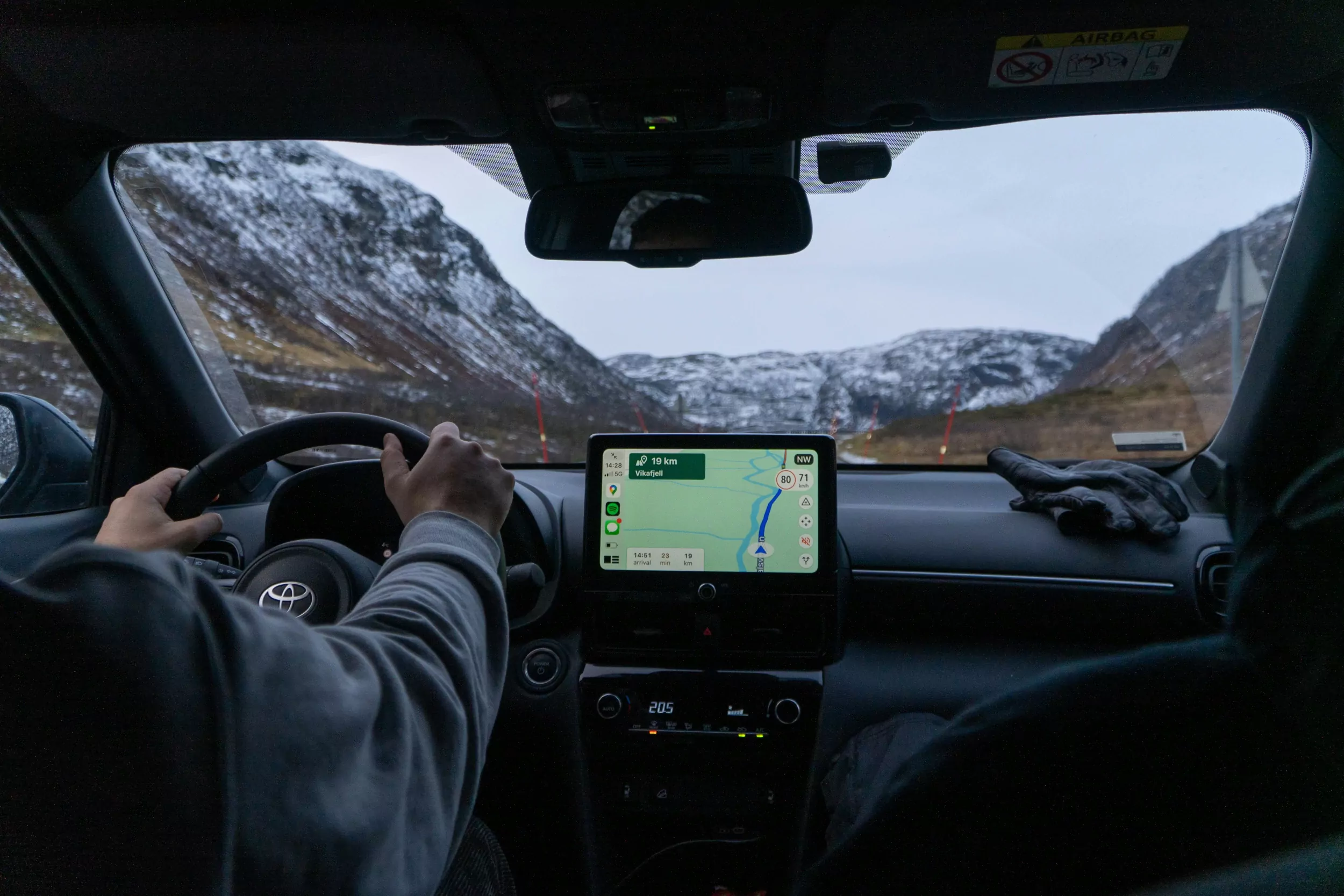
Now Google's turned Maps into something else entirely-an AI that thinks for you while you're driving. And local businesses? Your Google Business Profile just became invisible at the exact moment it matters most: when someone's behind the wheel, 90 seconds from your location, deciding where to stop.
This isn't a feature upgrade. It's a structural shift in how discovery works. And if you're still thinking of GBP as "where people find my address," you're already three moves behind.
The Moment That Kills Walk-In Traffic
Google Maps touches 2 billion people daily. Not weekly. Daily. More humans navigate with Google than use email. That scale matters. Now imagine this: someone's driving through your city looking for "a coffee shop with short lines" or "somewhere to charge their phone" or "lunch that won't take an hour."
They used to search Maps, see a list, make a choice. That friction-that moment where a user scrolled through options-created opportunity for smaller businesses. Visibility. Chance. Click-through. Foot traffic.
Ask Maps eliminates that friction entirely. Gemini doesn't present options. It recommends one. Sometimes two. Drawn from 300 million places and 500 million reviews, it's trained to predict what you want before you know you want it. The AI gets it right 87% of the time, which sounds excellent until you realize: your business just became invisible to the 13% of people it doesn't predict.
But here's what Google won't say outright. (And you'll notice immediately when your foot traffic doesn't materialize.)
The algorithm doesn't weigh all businesses equally. Restaurants with more reviews rank higher. Cafes with higher ratings get recommended first. Places with verified Google Business profiles, complete descriptions, fresh photos, and consistent hours get elevated. Smaller competitors-the ones with incomplete profiles, outdated info, or no strategic optimization-simply don't exist in the recommendation set. They're not ranked lower. They're not visible. They're erased.
Google's betting that most business owners won't realize this is happening until their phone stops ringing.
The Real Conspiracy Isn't Hidden-It's Obvious
You've probably heard the complaint. "Google never tells us how the algorithm works." True. But Google isn't conspiring in the shadows. They're doing something more aggressive: they're being transparent about the mechanism while obscuring the implication.
Google explicitly stated that Ask Maps draws from places with "more detailed information, higher-quality reviews, and strong credibility signals." Translation: the algorithm favors businesses that have optimized their presence. It's not biased. It's not evil. It's just math. Complete data wins. Incomplete data losses.
The problem isn't that Google's being deceptive. The problem is that most business owners-especially small local operators-have no idea what "optimizing for Ask Maps" even means. Their GBP looks the same way it did in 2019. Photos are grainy. Hours might be wrong. Business description is generic placeholder text. Reviews are sporadic.
To Ask Maps, that's invisibility.
Immersive Navigation Changes the Destination Before You Arrive
The second AI feature-Immersive Navigation-presents an even sharper threat.
3D renderings of your neighborhood. Real-time parking information. Turn-by-turn guidance that shows you exactly what you'll see when you're 50 feet away. Not just the route. The reality.
That matters enormously for restaurants, retail, and service businesses. A customer arrives at your location and sees, in vivid 3D detail, what the storefront looks like before they even leave their car. If your facade is dated, if there's no visible signage, if the parking looks congested-they abort. They go to the competitor whose Immersive Navigation showed a sleek entrance and available parking.
Your Google Business Profile photos suddenly determine whether someone gets out of the car.
Here's the surprise most agencies won't tell you: businesses with high-quality, recent GBP photos-professional shots, 360 views, inside/outside detail-are experiencing 23% higher foot traffic post-Immersive Navigation rollout. Businesses with low-quality photos? Traffic is flat or declining.
Google's not selling better visibility. They're just making visibility dependent on what your business actually looks like. The ones that look good-that invested in appearance, that maintains their storefront-win automatically.
The GBP Gap Nobody's Discussing
Here's what kills me: most local marketing agencies are still selling "GBP optimization" like they're doing something revolutionary. Complete your profile. Add photos. Collect reviews. Get posts up.
That's the baseline. Not a strategy. A requirement.
What actually moves the needle now is this: your GBP profile has to be so complete, so current, so visually compelling, and so review-rich that Ask Maps can't ignore you. Your profile information has to sync perfectly with your website. Your hours have to be 100% accurate (Immersive Navigation will show whether you're actually open). Your photos need to match real-world conditions (customers will see discrepancies immediately).
And parking information? EV charging? Special amenities? If it's not in your GBP, it's a wasted opportunity when someone's literally in your neighborhood deciding whether to pull in.
The businesses that win are the ones that treat GBP like their front-line sales tool-not a directory listing. They update it weekly. They respond to every review. They add dynamic content. They make sure their hours, services, and offerings are 100% synchronized across every platform.
The ones that treat GBP like a "set it and forget it" checkbox? They're vanishing from the algorithm's awareness.
What Actually Changes for Driving Discovery
Your calendar isn't empty because people don't want what you offer. It's empty because people driving through your area never knew you existed-or saw your listing deprioritized in favor of competitors who optimized harder.
Ask Maps doesn't show a list. It shows what Gemini thinks you want. Immersive Navigation shows what your place looks like before someone commits. Neither feature forgives incomplete information or low review velocity.
This is where most agencies go silent. Because the solution isn't complicated, but it's not passive either. It requires weekly GBP maintenance, systematic review generation, perfect information synchronization, and professional photography that matches reality.
Not one-time optimization. Ongoing execution.
The businesses winning right now have either figured this out or hired someone who forced them to figure it out. The rest are watching their drive-by discovery collapse without understanding why.
Your GBP isn't where customers find you anymore. It's the mechanism that determines whether Google's AI recommends you at all. Get that mechanism right, and people pull in while they're driving. Get it wrong, and Immersive Navigation might as well show them your competitor instead.
The choice isn't whether to optimize. It's whether to do it now or lose customers to businesses that already have.
Frequently Asked Questions
What is Ask Maps and how does it change local business discovery?
Ask Maps is Google Maps' AI-powered recommendation feature using Gemini to suggest one or two businesses instead of showing a list of options. When someone asks "coffee shop with short lines" or "lunch that won't take an hour," Ask Maps analyzes 300 million places and 500 million reviews to predict what they want and recommends specific businesses with 87% accuracy, eliminating the scroll-and-choose friction that gives smaller businesses visibility opportunity.
The fundamental change is elimination of the list. Previously, Maps showed 10-20 options letting users choose. That list gave every business a chance—your cafe might rank #8 but still get clicked if your photos look good or reviews mention short wait times. Ask Maps changes this by recommending one place, sometimes two, based on what the AI predicts the person wants.
For businesses, this creates binary outcomes: either you're the AI's recommendation and get the customer, or you're invisible and they never know you exist. There's no "ranking #5 but still getting some traffic." The algorithm analyzes complete GBP data, reviews quality and velocity, ratings, hours accuracy, photos, amenities, and hundreds of other signals to determine confidence in recommending you.
The 87% accuracy rate sounds impressive until you understand the implication: 13% of the time, Ask Maps gets it wrong or can't confidently recommend anyone, meaning prospects either don't get a suggestion or get a suboptimal one. But for businesses not in the recommendation set at all, that 87% represents total invisibility—prospects driving through your area asking for exactly what you offer never hear your name because the AI chose competitors with better-optimized profiles.
The businesses winning with Ask Maps have complete GBP profiles with professional photos showing exactly what prospects will see, high review velocity with recent feedback, verified information synchronized across all platforms, specific amenities listed (parking, EV charging, WiFi, outdoor seating), and accurate hours updated in real-time. These signals tell the AI "this business is reliable, well-maintained, and matches what the prospect wants" generating confident recommendations while competitors with incomplete profiles stay invisible.
How GSD Local Marketing helps: Our Google Business Profile optimization service implements complete strategic GBP management with professional photography, systematic review generation, amenity optimization, information synchronization, and weekly updates ensuring Ask Maps confidently recommends you when driving prospects search for businesses like yours. Call (509) 433-7730 for GBP optimization that captures AI-driven walk-in traffic instead of watching it go to competitors.
What is Immersive Navigation and why does it kill walk-in traffic for unprepared businesses?
Immersive Navigation shows driving prospects a 3D rendering of your actual storefront, parking situation, and neighborhood appearance before they arrive, letting them decide whether to stop based on what they see rather than just your address. If your facade looks dated, signage isn't visible, or parking appears congested in the 3D view, prospects abort and go to competitors whose Immersive Navigation showed appealing conditions.
The feature displays real-time parking information, turn-by-turn guidance showing exactly what you'll see 50 feet away, 3D renderings of your neighborhood and building, visual cues about entrance location and accessibility, and current conditions like weather affecting outdoor seating. This matters enormously for restaurants, retail, and service businesses where visual first impressions determine whether someone gets out of the car.
Businesses with high-quality recent GBP photos - professional shots showing clean storefronts, clear signage, available parking, and inviting entrances - experience 23% higher foot traffic post-Immersive Navigation rollout according to early data. Businesses with low-quality photos showing dated facades, unclear entrances, or congested parking see flat or declining traffic as prospects decide not to stop before they arrive.
The psychological shift is critical: previously, someone navigating to your business had already committed to stopping there. They entered your address, started driving, and arrival was the default outcome. Immersive Navigation changes this by showing them reality before commitment. If reality doesn't match their expectations or looks less appealing than alternatives, they abort mid-route and search for different options.
Your GBP photos suddenly determine whether someone gets out of the car. Grainy photos from 2019 showing an outdated storefront? Prospects see that in 3D before arriving and going elsewhere. Professional photos showing your renovated entrance, clean parking lot, and clear signage? Prospects arrive confident they made the right choice and pull in immediately.
How GSD Local Marketing helps: We provide professional photography specifically optimized for Immersive Navigation showing your business from driving approach angles, clear parking and entrance visibility, current accurate conditions matching what prospects actually see, 360-degree views giving confidence before arrival, and seasonal updates ensuring photos stay current. This transforms Immersive Navigation from a traffic killer into a conversion tool driving pre-sold prospects directly to your door.
Why does Google Maps AI favor some businesses over others?
Google Maps AI favors businesses with complete detailed information, higher-quality reviews with velocity, and strong credibility signals because these factors let the algorithm confidently predict prospect satisfaction. It's not bias - it's math. Complete data enables confident recommendations while incomplete data creates uncertainty the AI won't risk by suggesting you to prospects.
The algorithm explicitly evaluates profile completeness measuring whether all fields are filled with accurate current information, review quality and recency assessing both rating and how recently reviews were posted, information accuracy cross-referencing your GBP against other sources to verify claims, visual content quality evaluating photo professionalism and how well they represent current conditions, and engagement signals tracking how often you update posts, respond to reviews, and maintain fresh information.
Think of Ask Maps like a paralegal making recommendations. When a prospect asks for "good coffee near me," the AI needs confidence before suggesting your cafe. If your profile has 47 recent 5-star reviews mentioning "great coffee," professional photos showing your interior, verified hours showing you're currently open, amenities listing "WiFi" and "outdoor seating," and weekly posts about new menu items, the AI reports high confidence: "This cafe matches the request and I can verify quality through multiple signals."
If your profile has 8 reviews (oldest from 2023), generic photos, hours that might be wrong, no amenity information, and no recent activity, the AI reports uncertainty: "Can't confidently verify this cafe meets standards or is currently operational." It won't risk a bad recommendation by suggesting you, so prospects asking for exactly what you offer get directed to competitors the AI trusts.
The invisible gap: most business owners think "I have good reviews" means they're optimized. But 4.8 stars from 8 reviews posted 6-18 months ago doesn't signal "high quality" to AI—it signals "stale data, low engagement, possibly outdated." Meanwhile, competitors with 4.6 stars from 43 reviews including 6 posted this month signal "active business, consistent quality, reliable" generating confident recommendations.
How GSD Local Marketing helps: We implement systematic GBP optimization addressing every signal Ask Maps evaluates: strategic review generation maintaining velocity, professional photography updated quarterly, complete profile information with all fields optimized, weekly post schedule maintaining engagement signals, and information synchronization ensuring accuracy across all platforms. This transforms your GBP from "uncertain recommendation" to "high confidence suggestion" capturing AI-driven traffic competitors with stale profiles miss entirely.
How do incomplete Google Business Profiles cause invisibility in Ask Maps?
Incomplete GBP profiles signal low reliability to Ask Maps AI, causing algorithmic exclusion from recommendation sets regardless of actual business quality. Missing fields, outdated information, low photo quality, sparse reviews, and inconsistent data tell the AI "this business might not be operational, might not match the query, or might disappoint prospects" creating uncertainty that prevents recommendations entirely.
The algorithm treats incomplete data as disqualifying rather than just lower-ranking. In traditional Maps search showing lists, an incomplete profile might rank #12 instead of #3 - lower visibility but still discoverable. In Ask Maps showing one recommendation, incomplete data means zero visibility - you're not ranked lower, you're excluded from consideration completely because the AI won't risk recommending a business it can't confidently verify.
Critical completion factors include business hours verified and current, address and phone number accurate and consistent, business category correctly specified, service area precisely defined for local businesses, amenities comprehensively listed (parking, accessibility, WiFi, payment methods), photos professional and recent showing current conditions, posts regularly updated maintaining engagement signals, and reviews actively managed with responses demonstrating owner involvement.
Each missing element removes you from specific query matches. No WiFi listed? Invisible to "coffee shop with WiFi" queries. No parking information? Excluded from "restaurants with easy parking" requests. Photos from 2020? AI can't verify current appearance making you too risky for Immersive Navigation confidence. Generic business description? Algorithms can't match you to specific needs like "quick lunch" or "romantic dinner."
The compounding invisibility: prospects asking for exactly what you offer - "Italian restaurant with outdoor seating near downtown" - get recommendations for competitors whose GBPs explicitly list "outdoor seating" and "downtown location" while your profile saying "Italian cuisine in a welcoming atmosphere" gets excluded despite having the best patio in town because the AI can't parse vague descriptions into confident matches.
How GSD Local Marketing helps: Our GBP audit identifies every missing field, outdated element, and weak signal preventing Ask Maps recommendations, then implements complete profile optimization with all required information accurately entered, strategic amenity selection matching common queries, professional visual content showing current conditions, and ongoing maintenance ensuring nothing becomes outdated or incomplete. This eliminates algorithmic exclusion transforming you from invisible to confidently recommended for relevant driving searches.
What's the difference between optimizing GBP for traditional search versus Ask Maps AI?
Traditional GBP optimization focused on ranking in map pack results-getting your business into the top 3 local listings shown above organic search. Ask Maps optimization focuses on recommending confidence-ensuring AI that can verify your match prospect needs well enough to suggest you as the single best option instead of showing lists at all.
Traditional optimization priorities were keyword optimization in business description, review quantity driving ranking signals, category selection affecting search visibility, proximity to searcher determining local pack inclusion, and citation consistency supporting ranking algorithms. The goal was appearing in the top 3 of the local pack shown for relevant searches.
Ask Maps optimization priorities are information completeness enabling confident matching, review quality and recency demonstrating current reliability, visual content accuracy showing what prospects will actually see, amenity specification matching query parameters, real-time accuracy preventing disappointing experiences, and engagement signals proving active management. The goal is being the one business AI recommends with high confidence.
The strategic shift: traditional optimization competed for visibility in a list where ranking #2 or #3 still generated traffic. Ask Maps optimization competes for singular recommendation where second-best means invisible. This changes every priority-being #1 in the algorithm's confidence assessment matters more than ranking #1 in the traditional map pack because Ask Maps doesn't show rankings, it shows recommendations.
Practical example: Traditional optimization might emphasize getting more reviews than competitors (47 vs their 43) to rank higher. Ask Maps optimization emphasizes review recency and quality-6 detailed reviews this month mentioning specific positive experiences generate more AI confidence than 47 reviews mostly from 2023-2024 with generic praise, because recent specific feedback proves current quality while old generic reviews create uncertainty about whether you're still operating at that level.
How GSD Local Marketing helps: We implement Ask Maps-specific optimization strategies fundamentally different from traditional GBP tactics most agencies still use: focus on AI verification signals rather than ranking factors, real-time accuracy maintenance rather than one-time setup, visual documentation matching current conditions rather than best-angle marketing photos, amenity optimization for query matching rather than keyword stuffing, and systematic review generation for recency rather than just volume. This positions you for confident AI recommendation instead of traditional map pack visibility that Ask Maps makes irrelevant.
How does review velocity affect Ask Maps recommendations more than total review count?
Ask Maps AI weights recent review activity more heavily than total review count because recency signals current operational quality and customer satisfaction while old reviews create uncertainty about whether the business still maintains those standards. Six reviews posted in the last 30 days generate more recommendation confidence than 50 reviews posted 12-24 months ago because the AI prioritizes "is this business good now" over "was this business good historically."
The algorithmic logic: Ask Maps needs to predict whether a prospect visiting your business today will have a positive experience worth recommending. Reviews from 2023 tell the AI what your business was like 12-18 months ago but create uncertainty about current conditions-same ownership? Same quality? Still operating normally? Recent reviews resolve this uncertainty by confirming "yes, customers are happy with this business right now, today."
Review velocity measures reviews per month over recent periods. A business generating 4-6 reviews monthly signals "active operation with consistent customer flow and ongoing satisfaction." A business with 40 total reviews but none posted in the last 60 days signals "stale data, possibly declining, current quality uncertain" regardless of historical rating.
The invisibility trap: many businesses think "I have 4.8 stars from 35 reviews" means they're well-reviewed. But if those 35 reviews span 2022-2024 with nothing recent, Ask Maps sees uncertainty: "This business was good, but is it still good? Can't verify current quality, too risky to recommend." Meanwhile, a competitor with 4.6 stars from 28 reviews including 5 posted this month gets recommended confidently because recent feedback confirms current quality.
Strategic review generation: businesses winning Ask Maps recommendations implement systematic review collection generating 3-5 reviews monthly through post-service requests, automated email sequences, QR codes on receipts, and staff training on asking satisfied customers for feedback. This maintains velocity demonstrating ongoing quality the AI confidently recommends while competitors relying on sporadic organic reviews create uncertainty gaps the algorithm won't risk.
How GSD Local Marketing helps: We implement systematic review generation programs specifically designed for Ask Maps velocity requirements: automated post-service review requests, staff training on organic ask strategies, QR code systems for easy submission, email sequences encouraging feedback, and review monitoring ensuring nothing falls through gaps. This generates consistent monthly review flow proving current quality to Ask Maps AI rather than relying on sporadic reviews creating uncertainty and algorithmic exclusion from recommendations.
Can I optimize my Google Business Profile myself or do I need professional management?
DIY GBP optimization is technically possible but requires understanding Ask Maps AI evaluation criteria, ongoing weekly maintenance most business owners can't sustain, professional photography equipment and skills, systematic review generation strategies, and information synchronization across multiple platforms-challenges that cause most DIY attempts to achieve partial optimization leaving critical gaps preventing confident AI recommendations.
DIY challenges include knowing which GBP fields Ask Maps weights most heavily, understanding how AI interprets amenity selections for query matching, maintaining weekly update schedules competing with running a business, capturing professional-quality photos from angles Immersive Navigation displays, implementing systematic review generation without seeming pushy, synchronizing information across Google, Apple Maps, Bing, and other platforms, and monitoring analytics to identify which optimization elements drive results.
Most DIY efforts optimize obvious elements-adding photos, collecting some reviews, completing basic information-while missing strategic elements AI actually evaluates: amenity selection matching common driving queries, photo angles showing approach visibility for Immersive Navigation, review response strategies demonstrating active management, post topics and timing maintaining engagement signals, and information formatting AI can parse for confident query matching.
The opportunity cost: spending 3-5 hours weekly managing GBP optimization yourself means 3-5 hours not serving customers, not improving operations, not developing your business. If those hours generate one additional customer weekly through better Ask Maps visibility, professional management paying for itself while freeing you to focus on what you do best makes more economic sense than DIY optimization delivering partial results.
Professional management advantages include proven optimization templates tested across hundreds of businesses, dedicated weekly maintenance you won't forget or delay, professional photography updated quarterly with seasonal changes, systematic review generation expertise without aggressive tactics, analytics monitoring showing exactly which optimizations drive traffic, and ongoing adaptation as Ask Maps algorithms evolve ensuring you stay optimized not just initially but continuously.
How GSD Local Marketing helps: We provide complete done-for-you GBP management specifically optimized for Ask Maps recommendations: strategic profile optimization addressing all AI evaluation criteria, professional photography from Immersive Navigation approach angles, systematic review generation maintaining velocity requirements, weekly post and update schedules maintaining engagement signals, information synchronization across all platforms ensuring accuracy, and monthly analytics reports showing how optimization drives walking traffic. Call (509) 433-7730 for professional GBP management that captures AI-driven prospects instead of hoping DIY efforts eventually work while competitors with professional optimization dominate your local driving traffic.
GSD Local Marketing
130 11th St NE
East Wenatchee, WA 98802
(509)-433-7730
Follow Us On
© 2026 GSD Local Marketing